Having a house fire will alter your life completely and in many different ways. Even if you put out the flames before too much damage was caused to your home’s overall structure or safety, the remaining destruction will significantly alter both your home’s safety and structural integrity, many times beyond what you will be able to see at first glance. From historic homes located in Covington to newer construction styles, fire damage can do everything from affecting load-bearing walls to damaging your indoor air quality.
Many times, homeowners assume that if their house is still standing after it has been damaged by fire, they will be able to safely reenter it. Unfortunately, this is usually not the case. Fire will ultimately cause materials within your home to become weaker, leave harmful residues, and leave hidden dangers that could, and often do, become worse over time. Therefore, it is absolutely vital to utilize professional Fire Damage Restoration Covington, KY services to repair all aspects of your home’s damage.
How Fire Affects a Home Structure and Safety Beyond Your Sight
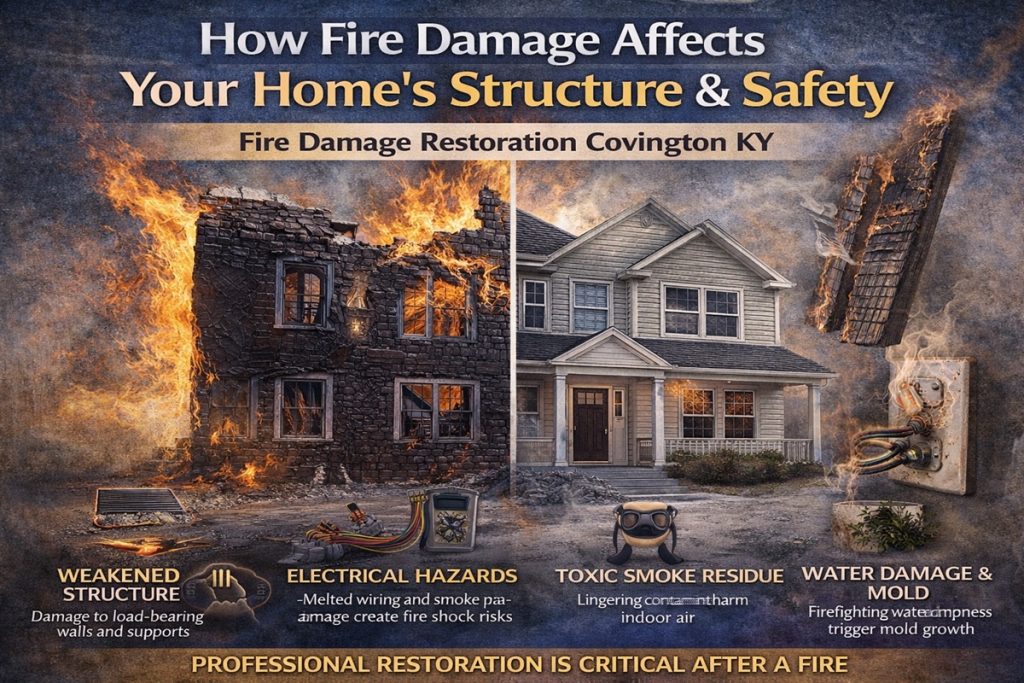
Fire damage has a much wider range of effects than burned walls or destroyed personal property. Your home is severely impacted by the heat, smoke, and soot that a fire produces.
- Integrity of Structural Products Declines When Exposed to High Temperatures
When wood, steel, concrete, and other building materials are exposed to extremely high temperatures, they can cause significant degradation or weakening of the material. A piece of wood may appear perfectly intact, but the load-bearing strength of that piece has likely been reduced significantly.
Steel beams typically warp or bend due to excessive heat, while concrete typically cracks or spalls, leading to an inability to support another load.
- Smoke and Soot Have Long-Term Effects on Property
Even if there is no visible fire damage to a structure, smoke and soot from the fire will have infiltrated that structure. Both smoke and soot are acidic in nature, and once they have penetrated a structure, they continue to corrode materials, wiring, and components of that structure for many months, sometimes even years, after the fire has been put out.
This is why Fire Damage Restoration Covington focuses on restoring both the visible damages and the “invisible damages.”
Structural Compromise Due to Fire Damage
Fire has the potential to compromise the very support structure of your home.
- Damage to Load-Bearing Walls and Support Beams
Load-bearing walls and supporting beams are the most vulnerable components of your structural system to fire damage. Once heat is applied to these structural members, they begin to lose their integrity and may shift or weaken, creating a greater potential for those structural members to fail or collapse when repairs have been delayed.
- Roof and Floor Systems May Have a Compromised Structure
Roof trusses and floor joists may exhibit evidence of extreme weakness even if they do not appear to have collapsed. Walking on a damaged floor or standing underneath a compromised roof can be dangerous without an assessment by a professional.
- Long-Term Risk Associated with Structural Damage
The buildup of minor structural issues can result in more severe problems if a property is not assessed by a professional. Therefore, Fire Damage Restoration Covington, KY performs comprehensive assessments before any rebuilding occurs.
Fire Damage May Result in Electrical Hazards
Electrical circuits and components pose one of the greatest hidden dangers from fire damage; these systems may still appear to be functional, but they could pose immediate risks to the safety and security of a property.
- Fire Damage and Electrical Systems
Electrical wires can be melted by excessive heat from a fire. When this occurs, the wire insulation melts off and exposes the wire itself. This exposure increases the risk of electrical shock and secondary fires from live wires. Often, circuits may appear to work after being repaired; however, they may still be unsafe for homeowners.
- Smoke Residue in Electrical Systems
Particles of smoke can travel through electrical systems, particularly through outlets, breaker panels, and appliances. Smoke residue can cause short circuits and corrosion in electrical systems and may result in system failure weeks or months after exposure.
- Assessing Electrical Hazards Before Power Restoration
When restoring a home after fire damage, electrical hazards must be identified and repaired by a qualified professional. A qualified electrician, as part of the restoration team, will assess and repair hazards before restoring power to the home.
Air Quality Problems Caused by Fire Damage
Fire damage extends beyond the physical structure of your home; it also impacts indoor air quality.
- Toxic Smoke
Smoke created from a fire contains numerous harmful particulates and chemicals that may remain in the home, including within walls, ceilings, and HVAC systems, and may cause respiratory issues, headaches, and other health concerns when inhaled.
- Soot Particles and Ash Contaminants
Soot particles are microscopic and can easily become airborne. These particles settle throughout the home, including hard-to-reach areas. Without proper cleaning and deodorizing methods, soot particles will continue to circulate long after the fire has been extinguished.
Fire Damage Restoration service near me has access to specialized equipment for cleaning and eliminating airborne particle contaminants, helping restore safe indoor air quality.
Why Is Fire Damage a Safety Concern After Cleanup?
Your home may appear clean after a fire; however, potential hazards may remain.
- Persistent Odors Indicate More Problems
Persistent smoke odors may indicate remaining soot or damaged materials that were not properly repaired. This is more than an unpleasant smell; it signals ongoing contamination issues.
- Nondescript Structural Shifts
Small shifts in framing or foundations may not be immediately visible but can lead to long-term safety hazards. Monitoring and addressing these changes promptly is recommended.
- The Cost of Delayed Repairs
If hidden fire damage is not addressed promptly, extensive repairs may be required later. Addressing Fire Damage Restoration in Covington early can reduce repair costs and prevent future safety issues.
The Importance of Fire Damage Restoration by Professionals
Fire damage restoration is complex and requires trained experts. Professionals use appropriate equipment and procedures to ensure safety during restoration.
- Comprehensive Assessment of All Aspects of Fire Damage
Professionals assess all elements of the home, including structural integrity, electrical systems, and air quality, to determine the full extent of fire damage.
- Industry-Approved Cleaning & Repair Techniques
Using industry-approved techniques, professionals clean and restore homes from soot to structure. Air-quality assessments and moisture measurements are completed before work begins. Fire Damage Restoration in Covington, KY, provide required documentation to insurance companies and ensures repairs meet local building codes.
Why Covington Homes Need Expert Fire Restoration
Due to the wide range of home ages, Covington homes face unique challenges with fire-related damage.
- Older Construction Materials
Historic homes contain unique components and materials that respond differently to heat and smoke and require specialized restoration processes.
- Local Climate Impacts Fire Restoration
Due to the humidity in Covington, smoke residue and water damage can worsen over time, making timely fire restoration essential.
- Working with a Local Expert
Choosing a local fire damage restoration near me provides expertise in Covington’s homes, climate, and building regulations.
Commonly Asked Questions About Fire Damage & Home Safety
1. Is my house safe to enter after a fire?
Rarely. Structural damage and air quality hazards may exist. A professional inspection is recommended before entering.
2. Can fire damage affect areas not visible to flames?
Yes. Smoke, soot, and heat can spread throughout the home, causing hidden damage.
3. When should fire damage restoration start?
As quickly as possible. Delays increase safety risks and restoration costs.
4. Will insurance cover fire damage restoration?
Generally, yes. Proper documentation is required for claim processing.
5. Is it possible to save fire-damaged items?
Some items may be salvageable; however, many must be replaced for safety reasons.
Final Thoughts About Fire Damage: Structural & Safety Hazard
Fire damage is one of the most stealthy and damaging home-related disasters. Structural failure risks, water damage, and air quality hazards can persist long after flames are extinguished. Addressing these issues quickly is essential to protect your home and family.
If you are experiencing fire damage and searching for fire damage restoration near me, seek a professional provider that prioritizes safety, structural integrity, and long-term recovery.
A+ Restoration is your local provider of fire damage restoration services. Our highly trained professionals specialize in fast, safe fire damage restoration for homeowners in Covington. We assess structural damage, perform smoke and soot removal, and restore homes to their pre-fire condition. A+ Restoration delivers high-quality workmanship and treats homeowners with respect and compassion during these difficult times.